
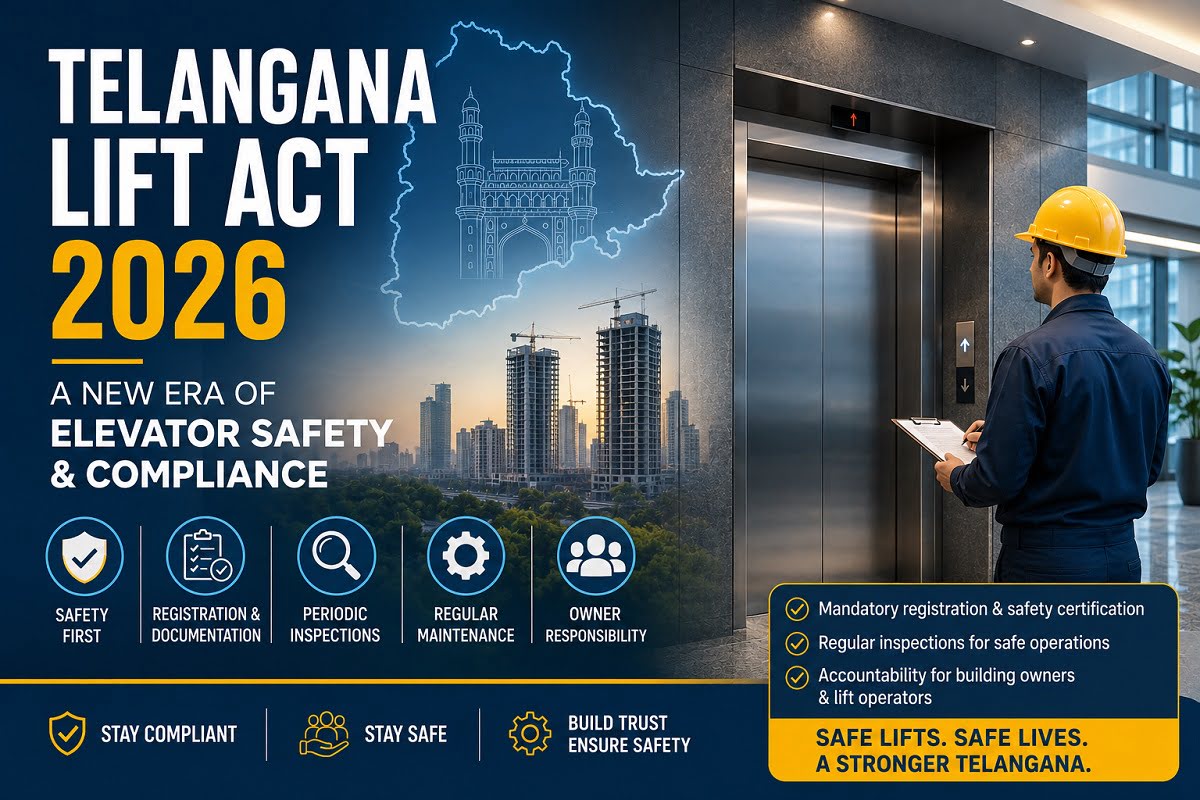
Telangana Lift Act: A New Era of Elevator Safety in Telangana
Elevators have become an essential part of modern residential apartments, commercial complexes, hospitals, hotels, shopping malls, and office buildings. With the rapid growth of high-rise construction in Telangana, ensuring elevator safety has become more important than ever.
To address this, the Telangana Government is introducing a dedicated Lift Act, which aims to regulate the installation, registration, inspection, operation, and maintenance of lifts across the state. The proposed legislation is expected to improve public safety and establish clear responsibilities for building owners and lift operators.
At Cube Elevators, we welcome this initiative as it reinforces the importance of quality installation, regular maintenance, and strict compliance with safety standards.
Why is Telangana Introducing a Lift Act?
Until now, Telangana has not had a dedicated law governing lifts, escalators, and moving walkways. With thousands of elevators operating daily, the absence of a comprehensive regulatory framework has made it difficult to ensure uniform safety standards.
The proposed Lift Act is designed to:
- Improve passenger safety
- Regulate lift installations
- Prevent accidents caused by poor maintenance
- Ensure regular inspections
- Fix accountability for building owners and operators
- Promote the use of certified lift equipment
Key Highlights of the Proposed Telangana Lift Act
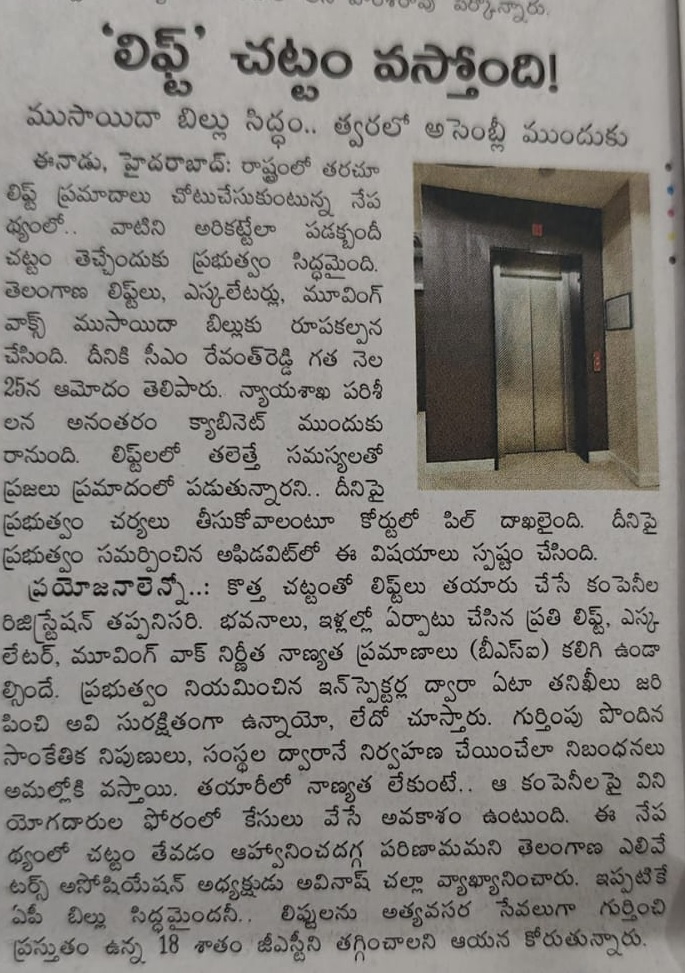
1. Mandatory Registration of Lifts
Every lift installed in residential, commercial, industrial, institutional, and public buildings is expected to require registration with the designated government authority.
This will help maintain an official database of elevators operating across Telangana.
2. Periodic Safety Inspections
The proposed Act emphasizes routine inspections to ensure elevators remain safe throughout their operational life.
Regular inspections help identify:
- Mechanical wear
- Electrical faults
- Door safety issues
- Emergency system failures
- Brake and control system defects
Preventive inspections significantly reduce the chances of unexpected breakdowns and accidents.
3. Safety Certification Before Operation
Newly installed elevators may require approval from the competent authority before being put into service.
Only lifts that meet prescribed safety standards will receive operational clearance.
4. Responsibility of Building Owners
The proposed legislation places responsibility on building owners or management associations to ensure:
- Timely maintenance
- Safety inspections
- Compliance with regulations
- Immediate repair of defects
- Proper documentation
Ignoring maintenance could lead to penalties under the new regulations.
5. Rules for Escalators and Moving Walkways
The proposed law is not limited to elevators alone. It is also expected to cover:
- Escalators
- Moving walkways (travelators)
This ensures safety across all vertical transportation systems.
6. Penalties for Violations
Operating an unsafe or unregistered elevator may attract penalties under the proposed Act.
These measures encourage building owners to prioritize passenger safety over cost savings.
Why Regular Lift Maintenance Matters
Whether or not regulations mandate inspections, routine maintenance is the best way to ensure long-term safety and performance.
Benefits include:
- Increased passenger safety
- Fewer breakdowns
- Longer equipment lifespan
- Lower repair costs
- Better energy efficiency
- Compliance with government regulations
- Higher property value
How Cube Elevators Helps You Stay Compliant
At Cube Elevators, we believe safety is never optional.
Our services include:
- Elevator installation
- Annual Maintenance Contracts (AMC)
- Preventive maintenance
- Modernization of old lifts
- Safety inspections
- Emergency breakdown support
- Genuine spare parts
- Technical consultation for regulatory compliance
Our experienced engineers ensure every elevator is maintained according to industry best practices and evolving safety requirements.
Preparing Your Building for the New Lift Regulations
Building owners should start preparing by:
- Scheduling regular maintenance
- Keeping service records updated
- Replacing worn-out components
- Conducting safety audits
- Using certified elevator service providers
- Planning modernization for older lifts
Taking proactive steps today can help avoid compliance issues tomorrow.
Why Choose Cube Elevators?
Cube Elevators is committed to delivering reliable, safe, and efficient elevator solutions for residential, commercial, industrial, and institutional buildings.
Our strengths include:
- Experienced engineering team
- High-quality installations
- Prompt maintenance support
- Competitive pricing
- Customer-first approach
- Focus on safety and reliability
Conclusion
The proposed Telangana Lift Act marks a significant step toward improving elevator safety across the state. With mandatory registration, periodic inspections, and clear maintenance responsibilities, the legislation is expected to create a safer environment for everyone who uses elevators daily.
For building owners and property managers, this is the ideal time to ensure that your elevators are professionally installed, regularly maintained, and prepared to meet future regulatory requirements.
Cube Elevators is ready to help you stay compliant while delivering safe, reliable, and high-performance elevator solutions.
Frequently Asked Questions (FAQs)
1. What is the Telangana Lift Act?
The Telangana Lift Act is a proposed legislation aimed at regulating the installation, operation, maintenance, inspection, and registration of lifts, escalators, and moving walkways in the state.
2. Why is the Lift Act important?
It improves passenger safety, establishes maintenance standards, and ensures accountability for building owners.
3. Will all lifts require registration?
The proposed legislation is expected to require registration of elevators covered under its scope with the designated authority.
4. Who is responsible for lift maintenance?
Building owners, societies, or facility managers are generally responsible for ensuring regular maintenance and safety compliance.
5. How often should elevators be serviced?
Most elevators should be serviced at least once a month, though the exact schedule depends on usage, manufacturer recommendations, and applicable regulations.
6. Does the Act apply to residential buildings?
Yes, the proposed law is expected to cover eligible residential buildings as well as commercial and institutional properties.
7. Are escalators included in the proposed regulations?
Yes. The proposed framework also covers escalators and moving walkways.
8. What happens if a lift is not properly maintained?
Poor maintenance can increase the risk of breakdowns, safety hazards, and potential penalties once the regulations are in force.
9. Can old elevators be upgraded to meet new safety standards?
Yes. Elevator modernization can improve safety, performance, energy efficiency, and regulatory compliance.
10. Why choose Cube Elevators?
Cube Elevators provides professional installation, maintenance, modernization, and safety-focused elevator solutions backed by experienced engineers and dependable customer support.
Call to Action
Looking for safe, reliable, and regulation-ready elevator solutions?
Contact Cube Elevators today for expert lift installation, AMC services, modernization, and safety inspections. Let us help you keep your elevators efficient, compliant, and secure for every passenger.